
Foundation Crack Repair in Tyler, TX
A stair-step crack under a window, a line across the slab, a door that stopped latching. Some cracks are cosmetic and some point to movement. Describe what you see once, and independent foundation companies serving Tyler and East Texas can reply with free quotes.
Get a Free Quote Call (323) 880-1300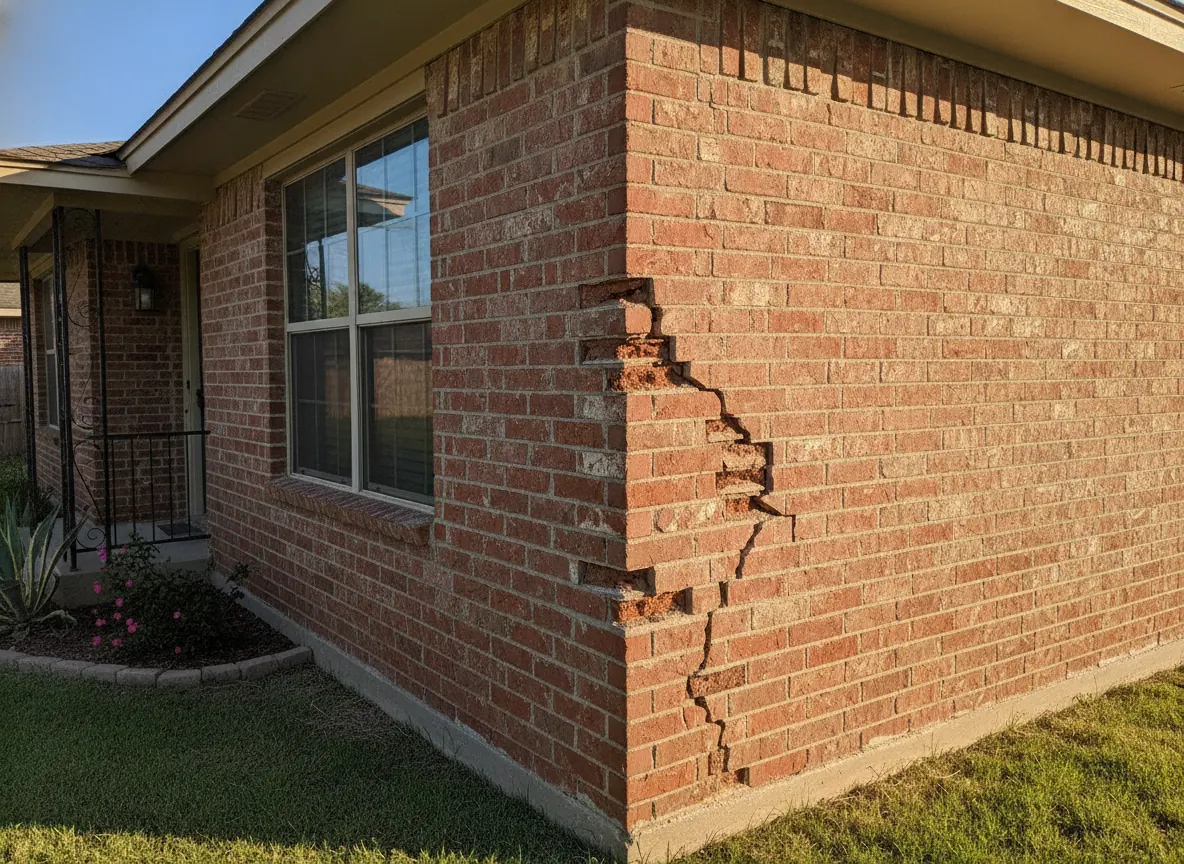
Cracks worth a closer look
- Stair-step cracks along the mortar joints in brick, often at the corner of a window or door
- A crack that is wider at one end than the other
- Horizontal cracks in a foundation wall or a stem wall
- A slab crack where one side sits higher than the other
- Doors that stick or won't latch, windows that bind, and gaps at trim or frieze boards
- Cracks that reopen after they were patched
One thin crack with nothing else going on is common. A pattern of cracks plus doors, windows or floors that changed is what usually earns an evaluation. On a slab home, see slab foundation repair; on a raised home, see pier and beam repair.
Hairline, stair-step and horizontal cracks
| What you see | What it often means | Sensible next step |
|---|---|---|
| Hairline slab crack, flat, no offset | Concrete shrinkage is a common cause | Mark, date and photograph it; watch it |
| Stair-step crack in brick mortar | Movement in the wall or the foundation under it | Watch for widening; ask about the cause before repointing |
| Horizontal crack in a wall | Pressure or movement that deserves a prompt look | Get an evaluation |
| One side higher, or reopens after patching | Uneven or ongoing movement | Get an evaluation and floor-elevation readings |
| Cracks plus sticking doors or sloping floors | The structure is moving, not just the surface | Consider an independent engineer, then quotes |
Mark each end of a crack in pencil, date it and photograph it with a ruler in the frame, then check again after the summer dry spell and after spring rain. The guide Foundation Cracks: Which Ones Need a Pro goes deeper.
What a foundation company typically does
Find the cause
The company measures floor elevations, checks the slab edge or crawl space, and follows the water from the roof and gutters.
Cosmetic or structural
It tells you whether the crack is surface shrinkage or a sign the foundation moved, and what it measured to decide.
Seal the crack
Concrete cracks are often filled with epoxy or polyurethane injection. Brick is usually repointed, and badly broken brick replaced.
Treat any movement
That can mean drainage changes, piers under a slab, or shimming and new supports under a pier and beam house.
Sealing closes a crack. It does not stop soil from moving, so it may need redoing on a house that is still moving.
Why cracks show up in Tyler and East Texas
Much of Tyler and Smith County is mapped in sandy and loamy soils, many over red clay subsoils with moderate shrink-swell potential (USDA NRCS). That mix means poor drainage, erosion and long dry spells can all move a foundation. Where red clay sits under the topsoil, it can shrink in a dry summer and swell after rain.
Tyler averages about 42 inches of rain a year, but July is the driest month (2.1 inches) and the city sees about 98 days of 90°F-plus heat (NOAA 1991–2020 normals, Tyler Pounds Regional Airport). That dry, hot stretch is when many homeowners first notice a new crack or a door that starts to stick. In 2011, all of Smith County was in exceptional drought for 21 weeks (U.S. Drought Monitor), and Tyler had 46 straight days of 100°F-plus heat that summer (NOAA). Tyler got just 25 inches of rain in 2011 and more than 68 inches in 2015 (NOAA).
About half of Tyler's homes were built before 1980 (Census ACS 2020–2024). Older neighborhoods like the Charnwood and Azalea historic districts include many early-1900s homes, some on pier-and-beam. Brick cracks on an older raised house can lead back to a settled pier rather than a slab. Large pines and oaks near the house can dry out clay soil under a foundation in a drought. See drainage and grading for the water side.
What foundation crack repair costs
| Item | Typical range | Source |
|---|---|---|
| Crack sealing / epoxy injection | $200–$1,000 | Fixr, Jan 2026 |
| Slab foundation repair | $1,000–$10,000 | Fixr, Jan 2026 |
| Piers (underpinning), per pier | $1,000–$3,000 each | Fixr, Jan 2026 |
| Structural engineer report | $300–$2,000 | Fixr, Jan 2026 |
| Foundation inspection (engineer) | $300–$1,000 (avg ≈ $600) | This Old House, Oct 2026 |
Sealing alone is the low end. If the crack is a symptom of movement, the price follows that fix. The Tyler foundation repair cost guide has the full table and a planning calculator.
When a crack needs attention soon
Most foundation cracks change slowly, over months. Move faster and get an evaluation soon when:
- A crack grows wider over days or weeks, not seasons
- A door or window that worked last week now jams or won't close
- Brick bulges outward or separates from a window or door frame
- Water comes in through a crack, or your water bill jumps with no clear reason, which can point to a leak under the slab
- A floor suddenly feels soft, bouncy or noticeably out of level
If you smell gas or see a pipe break, leave the house and call the gas utility or 911 first. Foundation work comes after the home is safe.
Questions to ask each company
- Is this crack cosmetic or structural, and what did you measure to decide?
- Does your plan treat the cause, or only seal the crack?
- Who designs or signs off on the repair? Is a professional engineer involved?
- If piers are needed, what type, how many and at what spacing? Please put it in writing.
- Can I have a written, itemized estimate?
- What does the warranty cover, is it transferable, and is there a transfer fee?
- Does this work need a permit, and will you check with the city?
No state license. Texas does not issue a state license for foundation repair companies, so check experience, insurance, written warranties and reviews yourself, and ask whether a licensed professional engineer (PE) designs or signs off on the repair.
Engineers. An independent Texas-licensed professional engineer works for you, not the repair company. You can look up a PE's license with the Texas Board of Professional Engineers and Land Surveyors (pels.texas.gov).
Permits. Whether your repair needs a City of Tyler building permit or an engineer's plan depends on the work. Your contractor should check with Tyler Building Services (423 W. Ferguson St., 903-531-1151). Outside city limits, Texas counties generally don't issue building permits for home repairs. In other towns, check with the city's building department.
Your rights. Texas law gives you until midnight of the third business day to cancel many contracts signed at your home after a sales visit (Tex. Bus. & Com. Code §601.051). Ask whether it applies to your contract and look for the cancellation form. The Texas Deceptive Trade Practices Act protects consumers against false or misleading claims and broken warranties. Ask whether the warranty is transferable if you sell the home, whether there's a transfer fee, and what it covers.
Foundation crack repair FAQs
Are stair-step cracks in brick serious?
Not always. Brick veneer can crack from a small amount of early movement and then stay put. A stair-step crack is worth an evaluation when it widens from one season to the next, when the brick on one side sits out of line, or when nearby doors and windows start to stick. Mark the ends, date them and take a photo so you can tell if it changes.
Is a hairline crack in my slab a problem?
A thin, flat crack with no height difference across it is common in concrete slabs and often comes from shrinkage as the concrete cured. It matters more when one edge sits higher than the other, when it keeps getting wider, or when it shows up with sloping floors or doors that no longer latch. Watch it through a dry July and August and a wet spring.
What does foundation crack repair cost?
Fixr lists crack sealing or epoxy injection at $200–$1,000 as a national range (Jan 2026). If the crack is a sign the foundation moved, the price follows the bigger fix, such as slab repair at $1,000–$10,000 or piers at $1,000–$3,000 each. These are national figures, not Tyler quotes, so compare written estimates.
Will sealing a crack stop my foundation from moving?
No. Epoxy or polyurethane injection closes a crack and can keep water and insects out, but it does not change the soil or support under the house. If the foundation is still moving, a sealed crack can reopen. Ask each company whether its plan treats the cause, such as drainage or settled supports, or only the crack itself.
Get free foundation crack repair quotes
Say where the crack is, whether the home is on a slab or pier and beam, roughly how old it is and whether doors or floors have changed. Your request goes to independent companies serving Tyler, Longview, Lindale, Whitehouse and nearby towns.
Tyler TX Foundation Experts is a free quote-matching service, not a contractor, an engineering firm or a city office. The companies that reply are independent, and some pay to receive requests. There is no cost to you and no obligation to hire anyone. You can also call to be connected with a local foundation repair company.
Get free quotes
Independent East Texas foundation companies reply to you directly.
Cracks, sticking doors or a sloping floor? Get free foundation quotes.
Describe it once and independent foundation companies serving Tyler, Smith County and East Texas can reply with no-obligation quotes.