
Fix the water first
Gutters, downspout extensions, grading and sometimes a French drain or a sump keep water from reaching the crawl space. See drainage and grading.
A musty smell, soft spots in the floor or water standing under the house are common reasons East Texas homeowners look under a crawl space. Describe what you see once, and independent companies serving Tyler and nearby towns can reply with free quotes for crawl space repair, vapor barriers, encapsulation and sagging floor repair. Tyler TX Foundation Experts is a quote service, not a contractor.
Get a Free Quote Call (323) 880-1300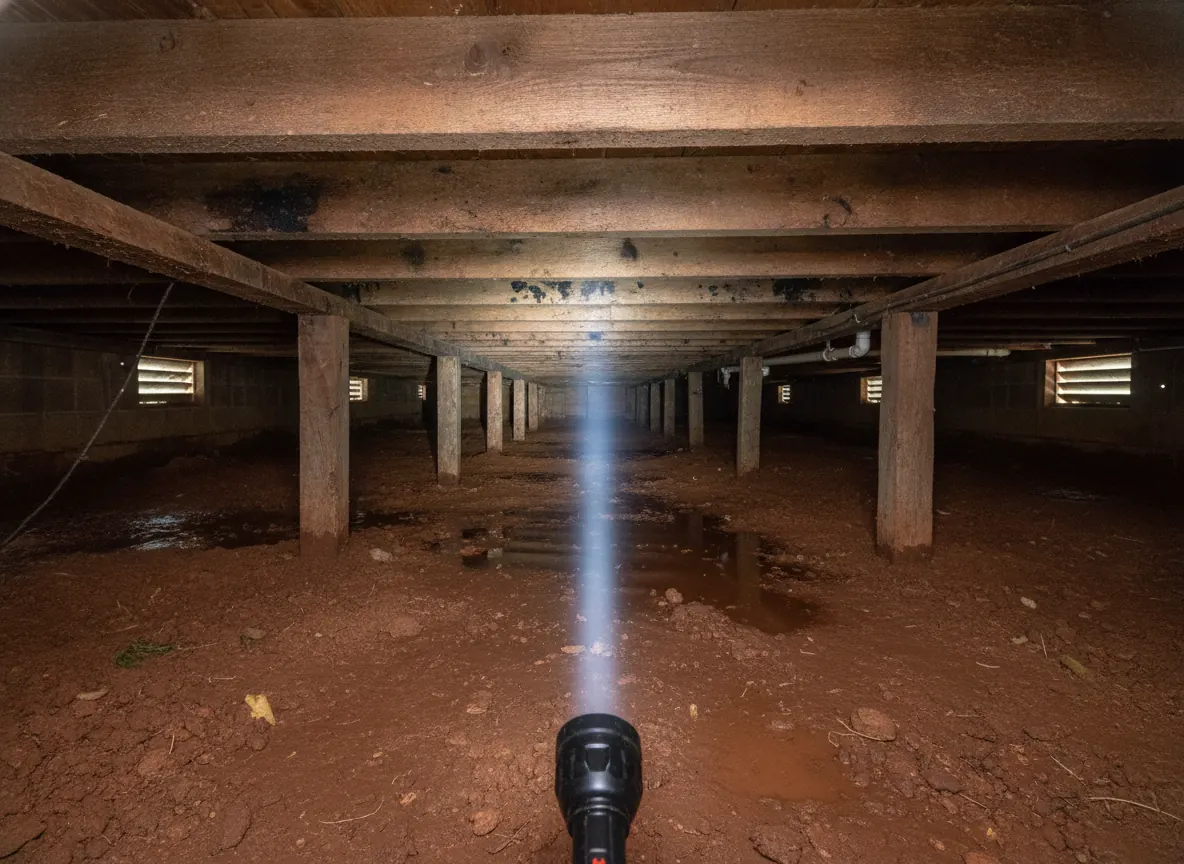
Look from the access opening with a flashlight before anyone crawls in. Do not go into a crawl space with standing water near wiring. A TREC home inspector is not required to enter a crawl space with less than 18 inches of headroom or an access opening smaller than 24 by 18 inches (22 TAC §535.228), so an inspection report may say parts were not seen.
Gutters, downspout extensions, grading and sometimes a French drain or a sump keep water from reaching the crawl space. See drainage and grading.
A plastic sheet over the soil slows moisture rising from the ground. Thickness, overlap, taping and how far it runs up the walls vary by company, so ask for the details in writing.
A sealed liner on the ground and walls, closed vents and a dehumidifier or conditioned air. Ask who services the dehumidifier and what the running cost looks like.
Structural work often comes with moisture work: new supports under sagging beams, sistered joists and replaced sills. A crawl space quote should say which parts are moisture control and which are structural, so you can compare companies line by line. For floor leveling, see pier and beam repair.
The company checks standing water, wood moisture, rot, insulation, ducts, vents and the condition of piers and beams.
Downspouts, grading, plumbing leaks and low spots are traced before anything is sealed.
Drainage work, structural repairs, vapor barrier or encapsulation scope, dehumidifier and warranty terms, each itemized.
Supports, sistered joists and replaced sills go in before the liner, so the barrier is not torn up later.
The barrier or encapsulation goes in, and a dehumidifier is set up where the plan calls for one.
Much of Tyler and Smith County is mapped in sandy and loamy soils, many over red clay subsoils with moderate shrink-swell potential (USDA NRCS). That mix means poor drainage, erosion and long dry spells can all move a foundation. Red clay subsoil drains slowly, so water that reaches the ground under a house can sit for days. Some local soils also hold a seasonal perched water table, which is one reason crawl spaces on certain lots stay damp.
Tyler averages about 42 inches of rain a year, but July is the driest month (2.1 inches) and the city sees about 98 days of 90°F-plus heat (NOAA 1991–2020 normals, Tyler Pounds Regional Airport). June is the wettest month, and long, humid summers mean warm air meets cool ducts and pipes under the floor. Tyler got just 25 inches of rain in 2011 and more than 68 inches in 2015 (NOAA). A crawl space that was dry for years can flood in a wet spring.
About half of Tyler's homes were built before 1980 (Census ACS 2020–2024). Older neighborhoods like the Charnwood and Azalea historic districts include many early-1900s homes, some on pier-and-beam. Older homes often have original sills and joists, and decades of damp air can soften the wood where it meets the foundation.
| Item | Typical range | Source |
|---|---|---|
| Pier-and-beam repair | $2,000–$15,000 | Fixr, Jan 2026 |
| Piers (underpinning), per pier | $1,000–$3,000 each | Fixr, Jan 2026 |
| Structural engineer report | $300–$2,000 | Fixr, Jan 2026 |
| Foundation inspection (engineer) | $300–$1,000 (avg ≈ $600) | This Old House, Oct 2026 |
Typical national ranges from published 2026 cost guides (Fixr, Jan 2026; This Old House, Oct 2026). Your price depends on an on-site evaluation.
National guides in this table do not give a single figure for vapor barriers or encapsulation, and scopes vary widely, so compare itemized quotes. Crawl space height, square footage, how much wood needs replacing, drainage work and a dehumidifier all change the price. The cost guide covers the structural side.
Otherwise, fix obvious water sources such as a loose downspout now, then compare quotes.
Texas does not issue a state license for foundation repair companies, so check experience, insurance, written warranties and reviews yourself, and ask whether a licensed professional engineer (PE) designs or signs off on the repair.
An independent Texas-licensed professional engineer works for you, not the repair company. You can look up a PE's license with the Texas Board of Professional Engineers and Land Surveyors (pels.texas.gov).
Whether your repair needs a City of Tyler building permit or an engineer's plan depends on the work. Your contractor should check with Tyler Building Services (423 W. Ferguson St., 903-531-1151). In other towns, check with the city's building department. Outside city limits, Texas counties generally don't issue building permits for home repairs.
Texas law gives you until midnight of the third business day to cancel many contracts signed at your home after a sales visit (Tex. Bus. & Com. Code §601.051). Ask whether it applies to your contract and look for the cancellation form.
Common causes are rainwater running toward the house, missing or short downspouts, a low spot in the yard that drains under the house, a plumbing leak, or humid summer air condensing on cool surfaces. Red clay subsoil drains slowly, so water that gets under the house can sit there. Fixing the water source usually comes before anything else.
Encapsulation usually means covering the ground and walls of the crawl space with a heavy vapor barrier, sealing vents and openings, and controlling humidity with a dehumidifier or conditioned air. It is a step beyond a ground-only vapor barrier. Ask each company what its version includes, since the word covers different scopes.
Usually, yes. Crews can add supports under sagging beams, sister weak joists and replace rotted sills from below. If the floor sags because the crawl space stays wet, the moisture needs fixing too or the wood can keep softening. See pier and beam repair for the leveling side.
Texas licenses mold assessors and mold remediators through the Texas Department of Licensing and Regulation (TDLR). If you see heavy growth or the house smells musty, ask whether the company uses a TDLR-licensed assessor or remediator, or hire one separately.
Tell us what you see or smell, where the floors feel soft, whether water stands under the house after rain and roughly how old the home is. Tyler TX Foundation Experts passes your request to independent companies serving Tyler and East Texas, and they reply to you directly. Companies may pay to receive requests. There is no cost to you and no obligation.
Independent East Texas foundation companies reply to you directly.
Describe it once and independent foundation companies serving Tyler, Smith County and East Texas can reply with no-obligation quotes.