
Why East Texas Foundations Move: Sandy Topsoil, Clay Subsoil and Drought
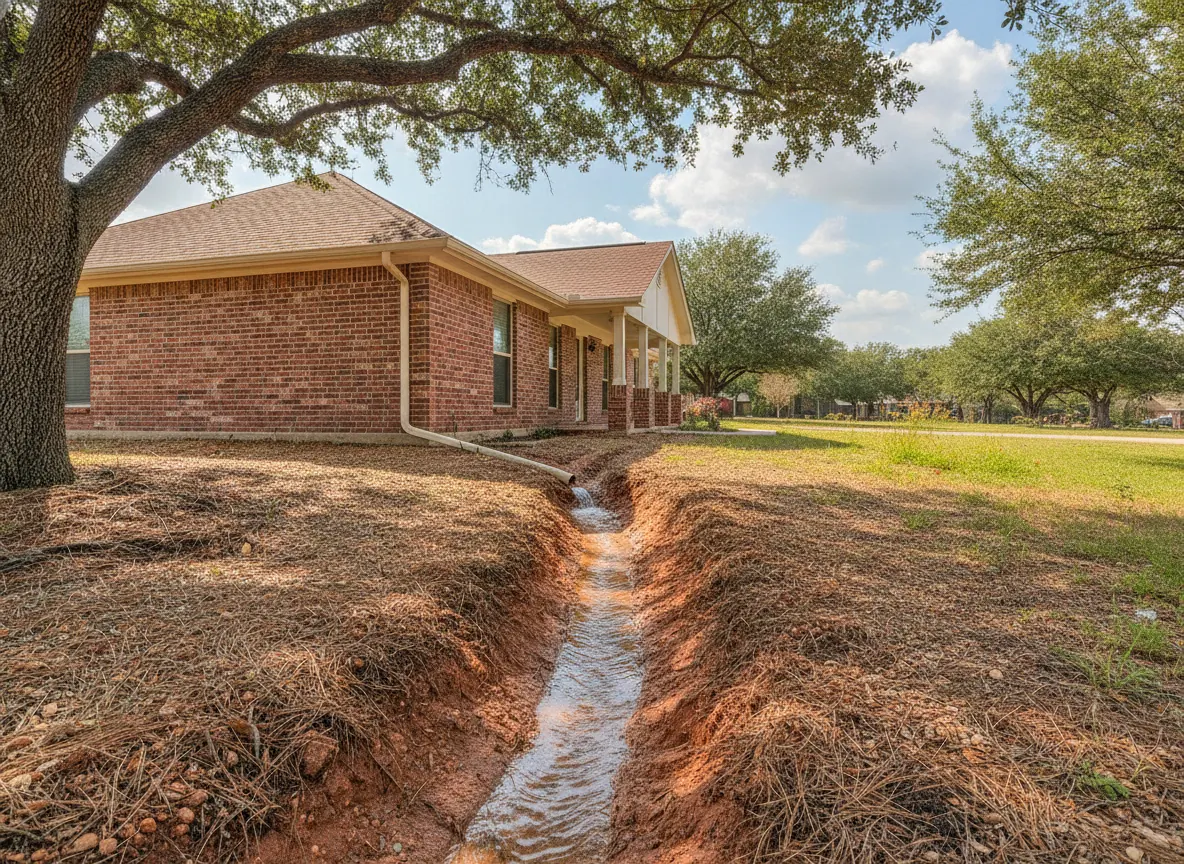
A crack shows up in the brick in August. A door that closed fine in spring now sticks. By the next wet season, the crack has narrowed again. Homeowners in Tyler, TX and across East Texas see this cycle often, and it comes down to two things: the soil under the house and the weather that wets and dries it.
Tyler is not the Blackland Prairie
A lot of Texas foundation advice is written for Dallas, Fort Worth or Austin, where heavy expansive clay is common. Smith County is different. Much of Tyler and Smith County is mapped in sandy and loamy soils, many over red clay subsoils with moderate shrink-swell potential (USDA NRCS). That mix means poor drainage, erosion and long dry spells can all move a foundation.
USDA soil survey data for Smith County shows the mix in numbers. About 59% of the county's mapped soil is rated low for shrink-swell, about 32% moderate, and only about 4.5% high or very high. Even so, shrink-swell is listed as a limitation for building houses on roughly a third of the county. The most common soil series include Cuthbert (fine sandy loam over a clayey subsoil), Wolfpen and Pickton (deep sands), and Kirvin and Redsprings (red clayey subsoils). Flood-plain soils along creeks, such as the Gladewater series, are the true high-swell clays.
Much of that red color comes from the area's geology. Tyler sits on sands and greensands of the Claiborne Group, and the weathered iron-rich layers are a likely source of the red clay many people call "East Texas red clay."
Check your own lot. Soils vary from block to block, and neighborhoods often sit on fill. Look up your address on the USDA's Web Soil Survey, and for a repair, ask whether a soil report or an engineer's evaluation is worth getting.
Three ways soil moves a foundation here
- Clay subsoil shrinking and swelling. Where sandy loam sits over red clay, the clay can shrink as it dries in a drought and swell when it gets wet again. The edges of a slab feel it first.
- Washout and erosion in sand. On deep sandy soils, water running off a roof or out of a leaking pipe can carry soil away from under a footing or slab edge. The result is settlement, not heave.
- Slopes and fill. Some of the soils Tyler is built on are mapped on hillsides. Sloping lots can drain toward the house or creep downhill, and loose fill can settle under its own weight.
The weather that drives the cycle
Tyler averages about 42 inches of rain a year, but July is the driest month (2.1 inches) and the city sees about 98 days of 90°F-plus heat (NOAA 1991–2020 normals, Tyler Pounds Regional Airport). June is usually the wettest month at about 4.4 inches, so the soil can go from soaked to dry within a few weeks at the start of summer.
Some years push harder. In 2011, all of Smith County was in exceptional drought for 21 weeks (U.S. Drought Monitor), and Tyler had 46 straight days of 100°F-plus heat that summer (NOAA). In 2022, extreme drought covered up to about two-thirds of Smith County. Tyler got just 25 inches of rain in 2011 and more than 68 inches in 2015 (NOAA). A dry year followed by a very wet one is the kind of swing that can move soil under slabs and piers.
Trees, roots and watering
Large pines and oaks near the house can dry out clay soil under a foundation in a drought. Roots matter most where the subsoil is clay, and less on deep sand. If you are planting, keep large trees well away from the house.
Some homeowners water near the foundation during long dry spells to keep the soil moisture steadier. If you do, use a soaker hose a short distance from the slab, water evenly around the house, and avoid flooding one side. Follow Tyler Water Utilities' current watering rules. Watering limits can apply to foundation watering just as they apply to lawns.
It is not just Smith County
Nearby counties differ. Rusk County, around Henderson, has more clay soils with high shrink-swell potential, and shrink-swell is listed as a dwelling limitation on well over half of its mapped area. Parts of Henderson County, around Athens, also have more clay soils with high shrink-swell potential. Gregg County, around Longview, looks more like Smith County, with sandy and loamy soils over clay. That is one reason two houses an hour apart can show different problems.
Other causes worth ruling out
- Plumbing leaks. A leaking drain or supply line under a slab can soften or wash out soil. Many companies recommend a plumbing test before lifting.
- Gutters and downspouts. Roof water dumped at the foundation is one of the most common and cheapest problems to fix. See foundation drainage and grading.
- Grading. Soil should slope away from the house. Flower beds and settled backfill often slope the wrong way.
- Damp crawl spaces. On pier-and-beam homes, a crawl space that stays wet can rot sills and joists and cause sagging floors. See crawl space repair.
What older Tyler houses have been through
About half of Tyler's homes were built before 1980 (Census ACS 2020–2024). Older neighborhoods like the Charnwood and Azalea historic districts include many early-1900s homes, some on pier-and-beam. A house built in the 1970s has already been through the 2011 drought and the wet years that followed. Some movement over that time is normal; ongoing movement that keeps cracking finishes or jamming doors is worth an evaluation.
What to do if you see signs
Write it down
Photograph cracks with a coin or tape measure for scale, and note the date. Check again in a few weeks.
Fix the water first
Extend downspouts, clean gutters and correct obvious grading problems.
Get an evaluation
If signs keep growing, have the house measured. Our foundation crack repair page explains which cracks need a faster look.
Compare quotes
Ask each company what it thinks is causing the movement and how its repair addresses it. Typical prices are on the foundation repair cost page.
Common questions
Does Tyler, TX have expansive clay soil?
Some, but not mostly. Much of Tyler and Smith County is mapped in sandy and loamy soils, many over red clay subsoils with moderate shrink-swell potential (USDA NRCS). Only about 4.5% of Smith County is rated high or very high for shrink-swell, mainly flood-plain clays.
Why do foundation cracks get worse in summer?
July is Tyler's driest month and the area sees about 98 days of 90°F-plus heat a year (NOAA). As clay subsoil dries, it can shrink and let parts of a foundation settle. Cracks that open in summer and close in wet months point to soil moisture changes.
Should I water my foundation during a drought?
Some homeowners use a soaker hose a short distance from the slab to keep soil moisture steadier. Water evenly around the house, and follow Tyler Water Utilities' current watering rules.
Are soils different in Henderson or Athens?
Yes. Rusk County, around Henderson, and parts of Henderson County, around Athens, have more clay soils with high shrink-swell potential than Smith County, according to USDA soil data.
Get quotes from local companies
Tyler TX Foundation Experts is a free quote service, not a foundation company, contractor or engineering firm. Describe what you are seeing once, and independent foundation repair companies serving Tyler, Smith County and nearby East Texas towns can reply with quotes. Companies may pay to receive requests, and there is no obligation to hire anyone. Request free quotes, or call (323) 880-1300 to be connected with a local foundation repair company.